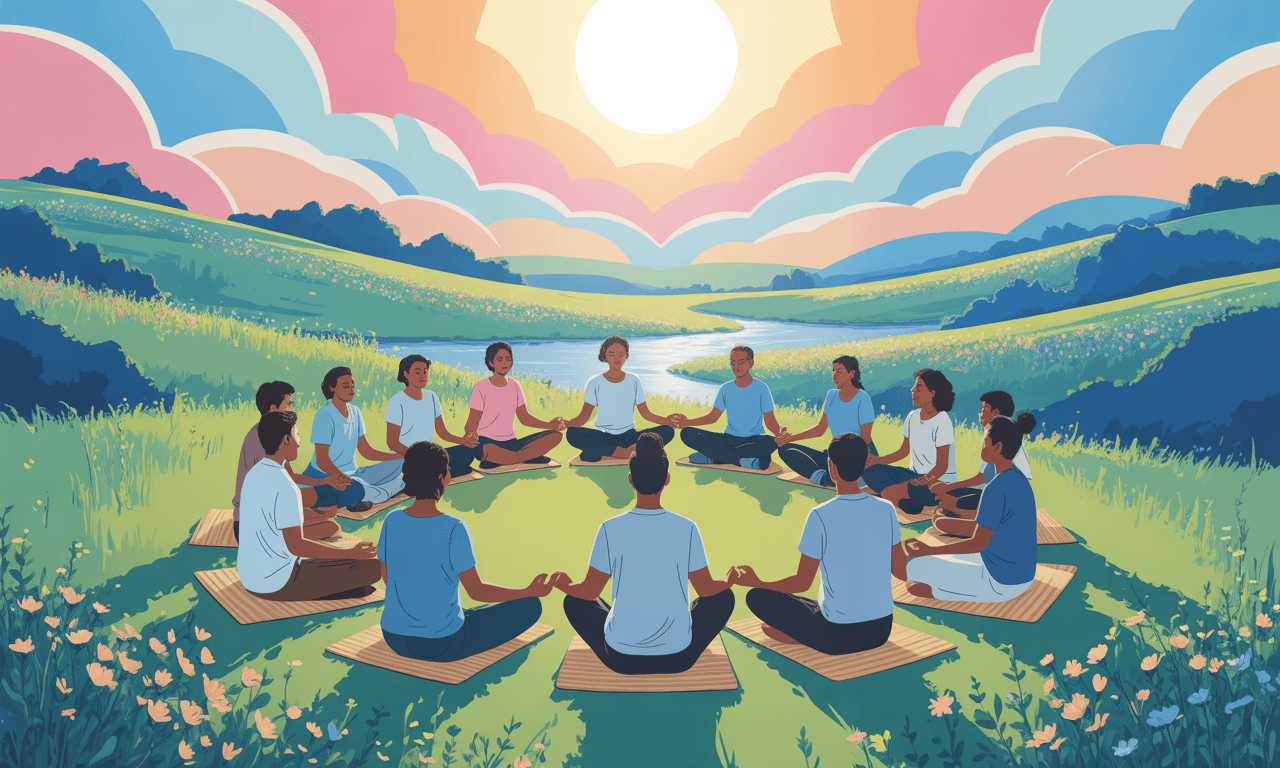
There's something sacred about the early morning hours, something that exists in those quiet moments before the world fully wakes up and the demands of the day begin their insistent pull on your attention. How you spend those first moments after opening your eyes sets the tone for everything that follows. You can stumble into your day reactive and scattered, letting external circumstances dictate your state of mind, or you can claim those morning hours as your own, using them to ground yourself in what matters most before you engage with everything else. This isn't about becoming a different person or adhering to some rigid routine that doesn't fit your life. It's about creating a morning practice that helps you remember who you are beneath all the roles and responsibilities, that connects you to your deeper intentions, and that prepares you to move through your day with more presence, clarity, and alignment.
The first thing to understand about morning practices is that they don't need to be elaborate or time-consuming to be powerful. We often see images of people meditating for hours at sunrise or doing complex yoga sequences or following multi-step rituals, and we think that's what awakened living requires. But the truth is that even five or ten minutes of intentional practice can fundamentally shift how you experience your entire day. What matters isn't the length of time or the complexity of what you're doing. What matters is the quality of attention you bring and the consistency with which you show up. A few minutes of genuine presence each morning will transform your life far more than an elaborate practice you do once and then abandon because it feels unsustainable.
One of the most foundational morning practices is simply pausing before you reach for your phone or engage with any external input. In our hyperconnected world, many people's first action upon waking is to check their phone, immediately flooding their consciousness with other people's thoughts, needs, problems, and agendas. Before you've even fully arrived in your own awareness, you're already reacting to the world. What if instead you gave yourself even just a few minutes to simply be with yourself first? To notice how you feel, what you're thinking, what's present in your body and heart before you let anything else in? This simple act of pausing creates a boundary between your inner world and the external demands, reminding you that you have sovereignty over your own consciousness and that you get to choose what you let in and when.
Many people find that beginning the day with some form of gratitude practice helps orient their awareness toward what's working and what's good rather than immediately focusing on problems and deficiencies. This doesn't mean forcing yourself to feel grateful when you don't or bypassing genuine difficulties. It means training your attention to notice the things that are actually going well, the blessings that are so constant you might take them for granted. Maybe you're grateful for the comfort of your bed, for the fact that you woke up at all, for the people you love, for your health, for the opportunities ahead of you today, or for something as simple as morning light or hot coffee. When you begin your day by acknowledging what's good, you prime your nervous system to look for more good throughout the day. You create a foundation of sufficiency rather than scarcity, of appreciation rather than complaint.
Conscious breathing is another powerful morning practice that requires no special equipment or training and can be done in just a few minutes. Before you get out of bed or while you're still sitting on the edge of it, simply bring your attention to your breath. Notice the sensation of air moving in and out of your body. Feel your chest and belly expanding and contracting. Without trying to change anything, just observe your natural breathing pattern for a few cycles. Then, if it feels good, begin to deepen and slow your breath slightly, perhaps breathing in for a count of four, holding gently for a moment, and breathing out for a count of six or eight. This simple practice activates your parasympathetic nervous system, signaling to your body that you're safe and that it's okay to relax. It brings you into the present moment and creates a sense of calm and centeredness that you can carry with you as you move into your day.
Setting an intention for the day is another practice that can profoundly impact how you show up. An intention is different from a to-do list or a set of goals. It's not about what you're going to accomplish but about how you want to be, what quality of presence you want to embody, or what you want to remember throughout the day. Your intention might be something like "I want to move through today with patience and compassion," or "I want to stay connected to my body and breath even when things get busy," or "I want to notice beauty wherever I encounter it," or "I want to speak my truth with kindness." When you set a clear intention in the morning, you create a kind of internal compass that helps guide your choices and responses throughout the day. When you notice yourself getting reactive or scattered, you can pause and remember your intention, using it to realign with how you actually want to be.
Movement is also a valuable component of many people's morning practices. You don't need to do a full workout or yoga class, though you certainly can if that serves you. Even just a few minutes of gentle stretching, shaking out your body, or moving in ways that feel good can help you fully inhabit your physical form and release any tension or stagnation that accumulated during sleep. Your body has been still for hours, and giving it some attention and movement helps wake up your energy and create a sense of vitality. This might look like simple stretches while still in bed, a few sun salutations, a short walk, some dancing to music you love, or any form of movement that helps you feel more alive and present in your body.
Many people find that some form of meditation or stillness practice is central to their morning routine. This doesn't have to mean sitting in perfect lotus position for an hour. It can be as simple as sitting comfortably for five or ten minutes and watching your thoughts without getting caught up in them, or focusing on your breath, or repeating a mantra or prayer that's meaningful to you, or simply resting in open awareness without any particular focus. The practice of meditation trains your mind to be less reactive and more spacious, to observe what's happening without immediately needing to fix or change it. When you cultivate this capacity in the quiet of your morning practice, you'll find it becomes more accessible throughout your day when you need it most.
Journaling is another powerful morning practice that helps you process what's moving through you and gain clarity about what matters. This doesn't need to be elaborate or literary. It can be as simple as writing three pages of stream-of-consciousness thoughts, getting everything out of your head and onto paper so you can see what you're actually thinking and feeling. Or it might be more structured, responding to specific prompts like "What am I feeling right now?" or "What do I need today?" or "What am I worried about and what can I actually control?" The act of writing helps you externalize your inner experience, creating some distance from it so you can see it more clearly. It also helps you track patterns over time, noticing what consistently comes up for you and what might need attention.
Reading something inspiring or spiritually nourishing can also be part of your morning practice. This might be a passage from a sacred text, a poem, a page from a book that speaks to your soul, or anything that helps you connect with something larger than your immediate concerns. The key is choosing material that genuinely resonates with you and uplifts your consciousness rather than just consuming content out of habit. When you feed your mind and spirit something beautiful and true first thing in the morning, you set a different tone than if you immediately dive into news or social media or work emails.
It's important to design your morning practice around what actually works for your life rather than trying to follow someone else's ideal routine. If you're not a morning person, you don't need to wake up at 5 AM to have a meaningful practice. If you have young children, your practice might need to be very short or flexible or even include them. If you have physical limitations, your movement practice will look different than someone else's. The goal isn't to achieve some perfect morning routine you saw on social media. The goal is to create a practice that genuinely serves you, that you can actually sustain, and that helps you show up more fully for your life.
Consistency matters more than perfection. You'll have mornings when you don't feel like practicing, when you're tired or rushed or just not in the mood. That's when the practice is actually most valuable. You don't have to do the full version of your practice, but doing something, even if it's just two minutes of conscious breathing or setting an intention, maintains the thread of connection. Over time, this consistency builds momentum and creates a foundation of stability that you can rely on regardless of external circumstances.
Your morning practice is also likely to evolve over time. What serves you in one season of life might not work in another. What feels meaningful when you're going through a difficult period might feel different when things are flowing easily. Give yourself permission to experiment, to adjust, to let go of practices that no longer resonate and to try new ones. The practice isn't meant to be rigid or fixed. It's meant to be a living relationship with yourself and your spiritual life that grows and changes as you do.
One of the most profound shifts that happens when you establish a consistent morning practice is that you begin to experience yourself as someone who has agency and choice rather than someone who's just reacting to whatever life throws at you. You're actively shaping your consciousness and your energy rather than passively receiving whatever state you happen to wake up in. You're claiming your sovereignty over your own inner experience. This sense of empowerment ripples out into the rest of your day and your life. When you know you have practices and tools that help you return to center, you move through challenges with more confidence and resilience.
Your morning practice also creates a kind of sacred container for your day. It's like drawing a circle of intentionality around your waking hours, marking them as precious and worthy of your full presence. When you begin your day by honoring yourself and your spiritual life, you're more likely to continue making choices throughout the day that reflect that same care and consciousness. The practice reminds you, again and again, that you're not just a biological machine moving through tasks. You're a conscious being with the capacity to choose how you relate to your experience, and that capacity is sacred and worth cultivating.
Ultimately, morning practices for awakened living are about creating space to remember what's true before you get lost in the stories and dramas of your day. They're about touching something deeper and more essential than your to-do list or your worries or your habitual patterns. They're about starting each day with a moment of coming home to yourself, of reconnecting with your intentions and your values, of grounding in your body and your breath and your awareness. This doesn't guarantee that your day will be perfect or easy. But it does mean you'll move through whatever comes with more presence, more clarity, and more connection to what matters most. And over time, these small morning moments of awakened living accumulate into a life that feels fundamentally different, a life that's lived from the inside out rather than the outside in, a life that's aligned with who you really are.